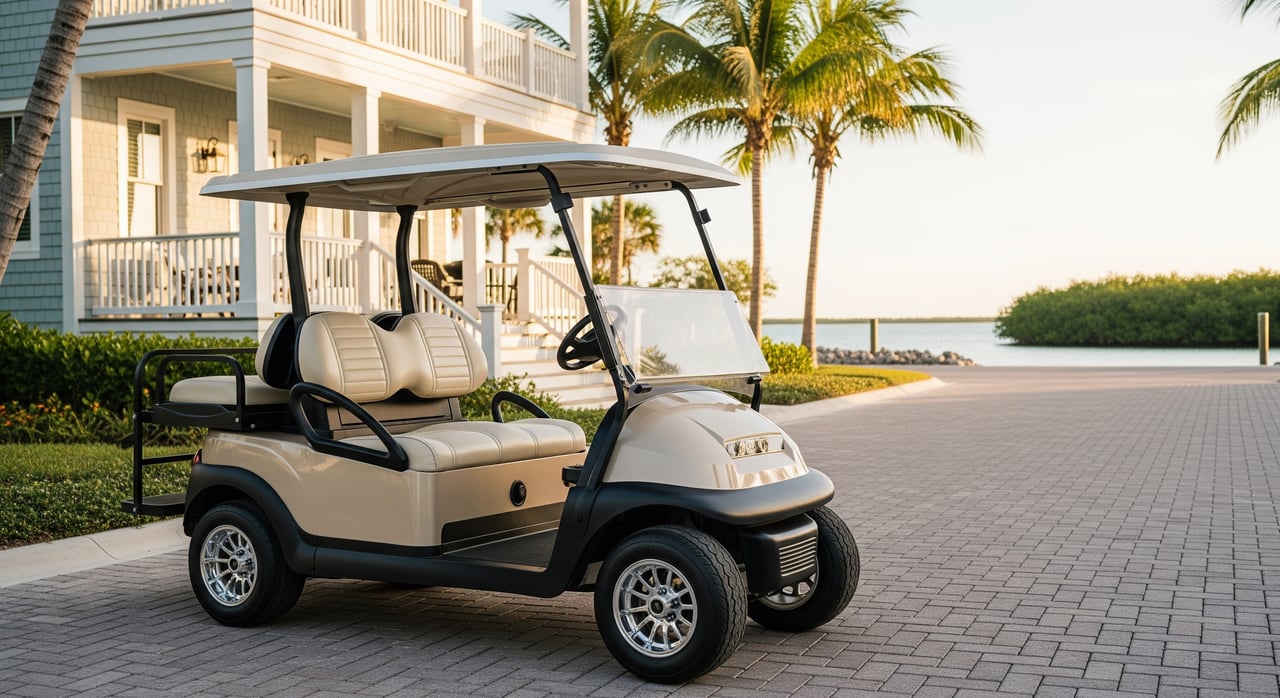
Thinking about using a golf cart to cruise Boca Grande? You’re not alone. Carts are part of the island rhythm, especially around the Village and Historic District. Still, the rules can feel confusing if you’re new or seasonal. In this guide, you’ll learn what’s allowed, what equipment you need, and how to drive with courtesy so you stay safe and avoid fines. Let’s dive in.
Golf carts vs. LSVs in Florida
Before you start, know what you’re driving.
- Golf cart: Built to carry golf equipment and people. It’s slower and less regulated than a Low-Speed Vehicle.
- Low-Speed Vehicle (LSV): Built to travel around 20–25 mph, must meet federal safety standards, and is registered and insured like a car.
Florida gives counties and municipalities the power to decide where carts can operate. Local ordinances often follow these patterns:
- LSVs are commonly allowed on roads posted up to 35 mph when authorized locally.
- Golf carts are commonly limited to roads posted 30 mph or less when authorized locally.
Because rules are local, they change from place to place. Boca Grande spans jurisdictions, so the exact rules can vary by street.
Always confirm the local ordinance that applies to your address before driving.
Where you can drive in Boca Grande
Boca Grande sits on Gasparilla Island and can be governed by different county rules depending on location. The Village and Historic District are also unique, with narrow streets and high pedestrian activity.
What to expect:
- Designated routes: Some streets permit carts while others do not. Major thoroughfares or sensitive areas may be off-limits.
- Village pace: Expect slower speeds and tighter rules in the historic core where people are walking, dining, and shopping.
- Beach areas: Most beaches and protected dunes do not allow motorized vehicles, including golf carts.
Important: Because Boca Grande can fall under either Lee County or Charlotte County, verify which county covers your address, then check that county’s rules for permitted streets and any decals.
Registration, permits, and age rules
The basics:
- LSVs: Must be titled and registered with Florida’s motor vehicle agency and carry insurance like a car. They have VINs and seat belts.
- Golf carts: Often exempt from state motor-vehicle registration, but many island communities require a local permit or decal for designated streets.
- Operator requirements: Local ordinances often set a minimum operator age (commonly 16 and older) and require a valid driver’s license. Carry only as many passengers as there are seats.
For Boca Grande, confirm whether your cart needs a county or community decal and whether there are seasonal rules.
Equipment you need to stay legal and safe
Required or commonly expected equipment:
- Headlights and taillights for any night operation
- Brake lights and turn signals (often standard on LSVs)
- Reflectors and at least one rearview mirror
- A slow-moving vehicle emblem or reflective signage if required locally
- Seat belts for LSVs, plus federal safety equipment and a VIN
Recommended add-ons for comfort and safety:
- Horn or bell to alert pedestrians and cyclists
- Windshield and side mirrors for visibility
- Reflective decals or clothing for evening use
- Compact fire extinguisher and first-aid kit, especially for longer outings
Night driving and visibility
If you plan to drive after sunset:
- Use headlights and taillights and make sure they’re bright and functional.
- Add reflectors or an SMV triangle if required locally.
- Reduce speed, increase following distance, and avoid unlit paths.
Many local ordinances prohibit night use unless your cart is properly lighted. When in doubt, do not drive after dark.
Insurance basics for carts and LSVs
- LSVs: Typically must carry vehicle insurance like any passenger car.
- Golf carts: Requirements vary. Many owners add a specific golf-cart policy or a homeowner’s endorsement, since auto policies may exclude non-registered carts.
If you’re renting, ask what the rental company’s policy covers and whether you need supplemental liability or uninsured-motorist coverage.
Sharing paths and Village etiquette
In Boca Grande’s Village and Historic District, safety and courtesy matter.
- Go slow: Aim for a calm, predictable pace, especially near shops, crosswalks, and trail entrances.
- Yield first: Pedestrians always come first. Give families, groups, and strollers extra space.
- Pass with care: Announce yourself with a bell or a friendly “Passing on your left,” and give wide, slow passes around bicycles and joggers.
- Signal clearly: Use turn signals or hand signals for turns and stops so others can anticipate your move.
- Park respectfully: Use marked golf-cart areas. Never block sidewalks, ramps, driveways, fire lanes, or building entrances.
- Keep it quiet: Avoid loud music and unnecessary revving. Respect the historic character and nearby homes and businesses.
- Know the beach rules: Do not drive on dunes or the sand unless a clear local rule permits it.
- Be mindful about alcohol: Follow Florida open-container and local laws. Treat a golf cart with the same responsibility you would any vehicle.
Quick-start checklist for new owners and renters
Use this to get rolling with confidence:
- Verify your jurisdiction: Determine whether your address falls under Lee County or Charlotte County.
- Confirm permitted streets: Ask for a current map or list for the Village and Historic District.
- Check permits and decals: Learn if your cart needs a county or community sticker, and how to get it.
- Inspect equipment: Headlights, taillights, brake lights, reflectors, mirrors, and signals should be in working order.
- Review night-use rules: Know if after-dark operation is allowed and what lighting is required.
- Confirm insurance: Talk to your insurer or rental company about liability and coverage gaps.
- Plan your route: Avoid busy pedestrian areas at peak times and use designated cart parking.
- Save important contacts: Keep local non-emergency and rental support numbers handy, plus Fire/EMS.
Resources and who to call
For the most accurate, address-specific guidance, reach out to:
- Lee County or Charlotte County Code Enforcement, Public Works, or Transportation for local ordinances and permitted routes
- The county Sheriff’s Office that serves Gasparilla Island for enforcement questions and non-emergency assistance
- Florida Department of Highway Safety and Motor Vehicles for LSV registration guidance
- Your community association or property owners group for any decals, stickers, or special Village rules
- Local rental companies for route briefings, equipment, and insurance details
- Boca Grande Fire Department and EMS for safety guidance and emergency planning
Please confirm current county and HOA rules, permits, and nighttime requirements before operating a golf cart. Rules can change seasonally and vary by street.
Final thoughts
Golf carts help you enjoy Boca Grande at an easy pace. When you know the rules, keep your equipment in order, and drive with courtesy, you help protect the island’s charm for everyone. If you are buying or renting on the island, it pays to verify what applies to your specific address and community.
If you would like help confirming the latest rules for a particular property or neighborhood, connect with Melissa "Mel" Csank for local, concierge guidance.
FAQs
What’s the difference between a golf cart and an LSV in Boca Grande?
- A golf cart is slower and often not state-registered, while an LSV travels about 20–25 mph, must meet federal safety standards, and is registered and insured like a car.
Can I drive a golf cart anywhere on Gasparilla Island?
- No. Florida allows local governments to authorize carts only on designated roads. Boca Grande’s permitted streets vary by area, so confirm routes for your address.
Do I need a permit or decal for my golf cart in Boca Grande?
- Possibly. Many island communities require local permits or decals for carts on designated streets. Check county and community rules for current requirements.
Are golf carts allowed on the beach or dunes near the Village?
- Generally no. Beaches and protected dune areas typically prohibit motorized vehicles, including golf carts. Verify local beach access rules before you go.
What lighting do I need to drive at night in Boca Grande?
- If night operation is allowed, you should have working headlights and taillights, plus reflectors. Some local rules may require additional reflective signage.
Is insurance required for my cart on the island?
- LSVs usually need vehicle insurance. Golf carts may not be required by state law, but a specific cart policy or homeowner’s endorsement is strongly recommended.
Can my teen drive our golf cart around the Village?
- Local rules often require a licensed driver and may set a minimum age, commonly 16 and older. Confirm the current operator rules that apply to your address.