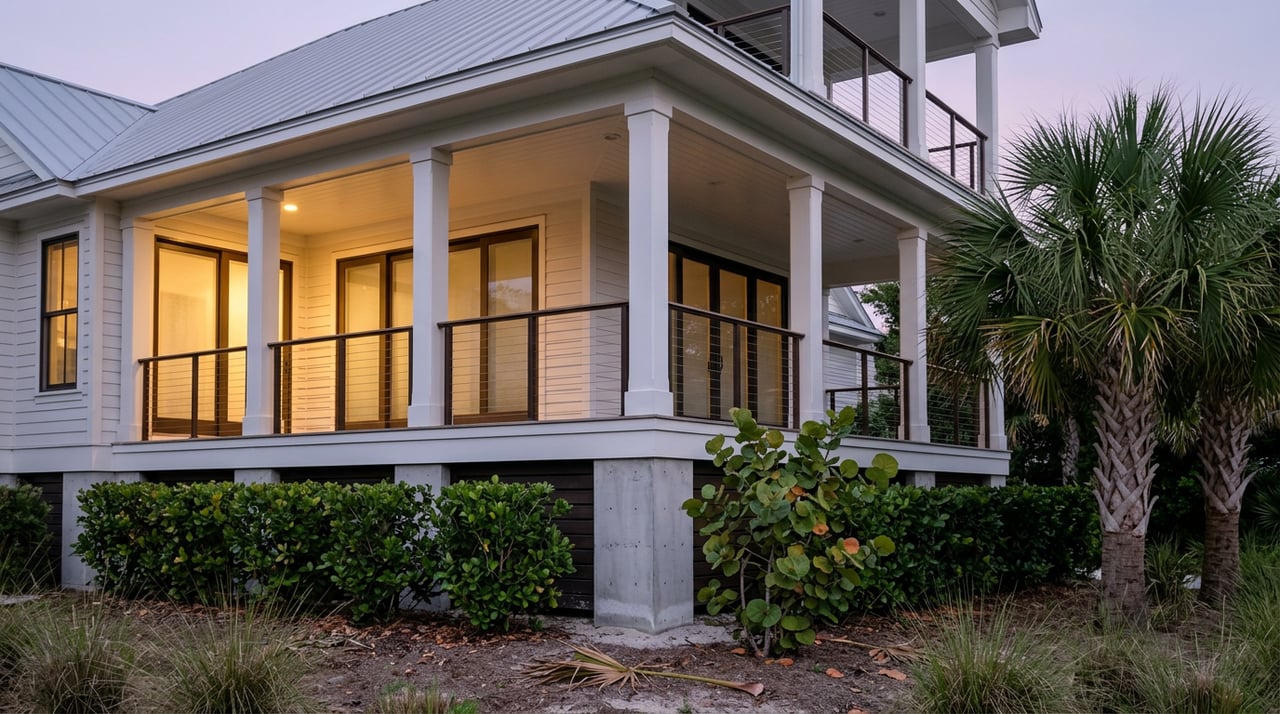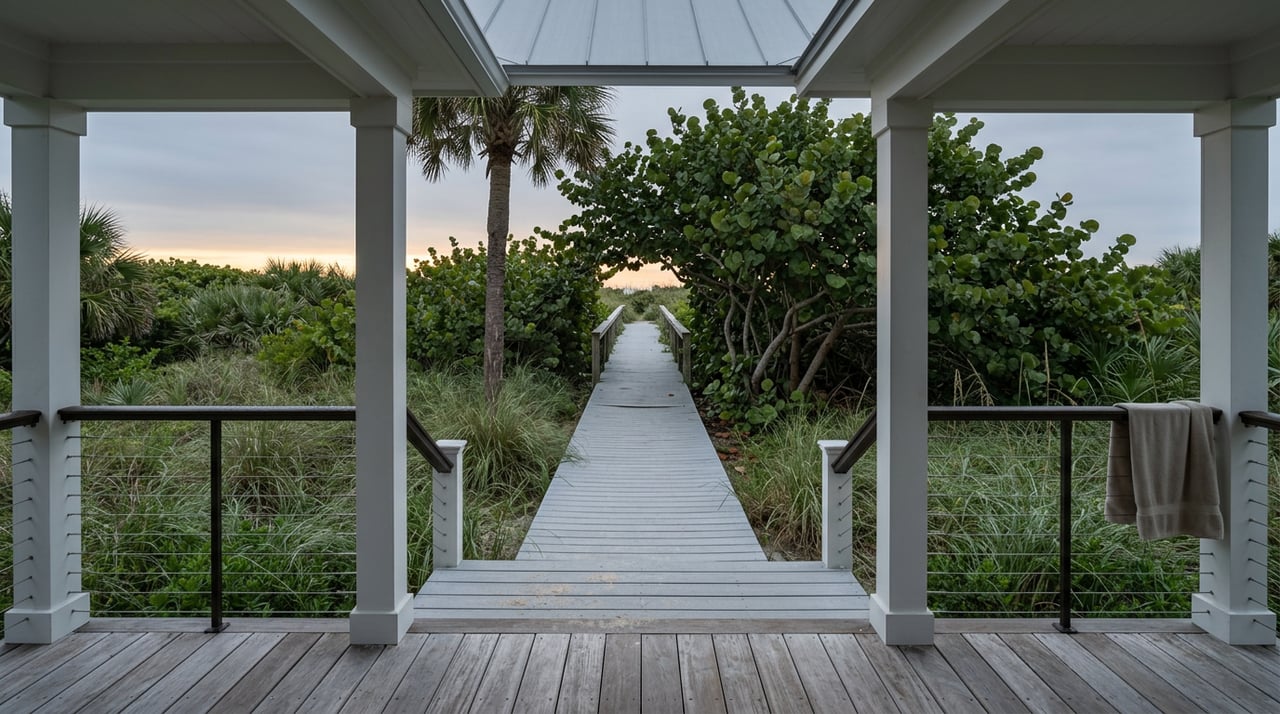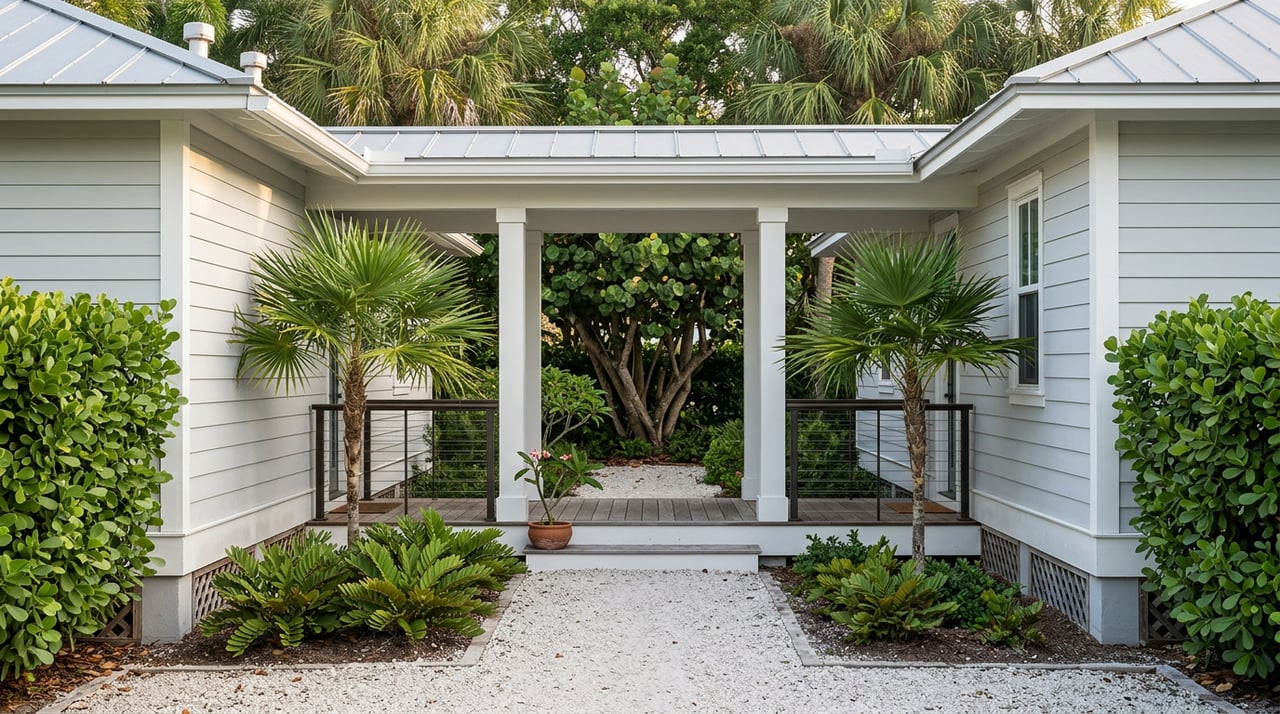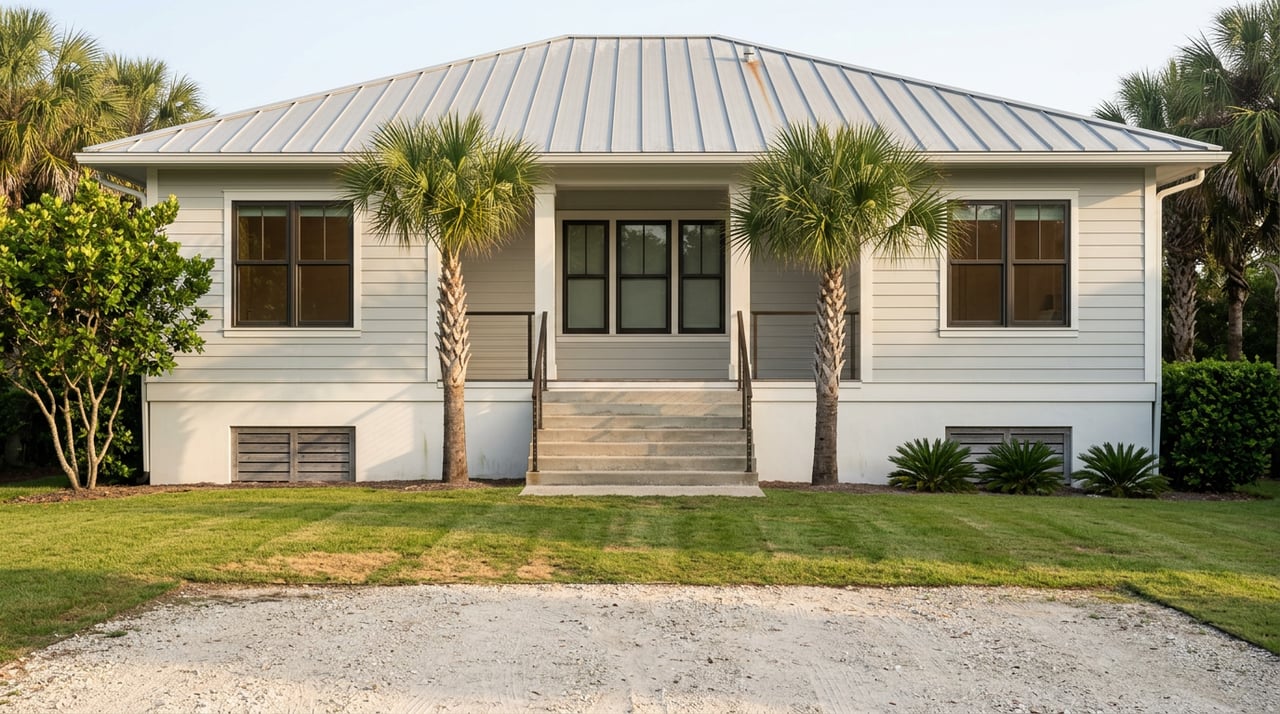
A Boca Grande Club purchase in 2026 is no longer decided at the kitchen island. It is decided in the association file room. The unit you tour is the smaller half of what you are buying. The larger half is a three-story-plus concrete building on the Gulf, and Florida's post-Surfside statutes have rewritten what a careful buyer must read before the inspection contingency runs.
That is the thesis of this post, and it is worth stating plainly: at the Club, the two documents that decide your outcome are the milestone inspection report and the Structural Integrity Reserve Study. Every fee schedule, view corridor, and rental clause matters less than what those two reports say and how the association has funded the work they identify.
Why the Club sits in the toughest tier of the new regime
The Boca Grande Club has been in continuous operation since 1978, with 297 condominiums, village homes and marina village condos spread across roughly 65 acres at the north end of Gasparilla Island. Most of the multi-story buildings are three or more habitable stories, and every one of them sits well inside three miles of salt water.
That geography is not decorative. Under Florida Statute 553.899, milestone inspections are required for buildings three stories or more once they reach 30 years from the certificate of occupancy, or 25 years if the building is within three miles of the coastline, and they recur every ten years after the initial inspection. The Club's Gulf-front buildings crossed the 25-year mark long ago. Its bayside Marina Village buildings, constructed between 1981 and 2007, are all in the same bucket.
So every three-story Club building is a milestone-inspection building, and the state's separate reserve-study requirement rides alongside it. Residential condominium associations with buildings three or more habitable stories in height are required to complete a Structural Integrity Reserve Study at least every 10 years, and associations existing on or before July 1, 2022, that are unit-owner controlled, had to complete a SIRS by December 31, 2025, unless coordinated with a milestone inspection required on or before December 31, 2026.
The Club's building stock puts every buyer squarely inside that timeline.
The friction most buyers meet at day 12
Here is the friction that catches even experienced second-home buyers off guard. The standard inspection contingency in a Florida contract is short, and the association's documents can take longer to arrive than the contingency allows. If you do not ask for the specific documents on the day you go under contract, you are relying on hope.
The five items to request in writing, on day one, at the Club:
- The most recent Phase 1 milestone inspection report for the specific building your unit sits in.
- Any Phase 2 report that followed, plus the engineer's recommended repair schedule.
- The current SIRS, including the baseline funding plan.
- Twenty-four months of association meeting minutes and the current-year operating and reserve budget.
- A written statement from the board on any pending, noticed, or approved special assessments and any active insurance appraisal.
The reason the list matters is the January 1, 2026 rule. As of January 1, 2026, full reserve funding for SIRS components is mandatory and cannot be reduced or waived by owner vote, and for years many Florida associations had kept dues artificially low by voting to skip that funding. That practice ended at the Club and everywhere else covered by Chapter 718.
Reading a Boca Grande Club SIRS in five moves
A SIRS looks like a spreadsheet with a narrative attached. It is actually a decision tool. Read it in this order.
First, confirm what it covers. A SIRS inventories eight structural elements plus other elements over $25,000 that have an impact on the structural integrity of the building as determined by the visual portion of the SIRS. On a Gulf-front building, expect waterproofing, windows, roof, and primary structural members to dominate the numbers.
Second, read the milestone findings the SIRS is built on. The milestone report answers whether the building is sound today. The SIRS answers whether the reserves are on schedule for the work the milestone identified. As one Florida attorney's guide puts it, the milestone inspection answers the structural question, and the SIRS answers the financial question, so a buyer reads both documents together.
Third, look at the baseline funding plan. Under HB 913, the SIRS report must include a baseline funding plan that demonstrates how the association will ensure its reserve cash balance for the SIRS components stays above zero throughout the funding period. If the plan runs the reserve line near zero in year three or four, the assessment is not a possibility. It is arithmetic.
Fourth, check how the board plans to fund the gap. HB 913 opened new tools. Boards may now use loans, lines of credit, or special assessments to fund reserves, with proper board or member approval, and the reserve threshold increased from $10,000 to $25,000. A well-run board will show you the mix. A quiet board is a warning.
Fifth, price the assessment risk into your offer. Statewide analysis has documented the range. The combined effect of mandatory reserves, milestone inspections, and a hard insurance market has produced a wave of special assessments, some from $10,000 to over $100,000 per unit. The Club's oceanfront buildings are not immune to that math.
What each Club building carries into the read
The Club is not one building. It is a portfolio, and the SIRS and milestone documents differ address by address.
- Gulf-front condos including Beach Chalet, Dunes Chalet, Sea Oats, and Sundown Colony. These sit closest to salt spray and take the brunt of storm exposure. Expect the roof, windows, and waterproofing lines in the reserve study to carry the largest numbers.
- Village Homes. The Club property encompasses approximately 60 acres and offers roughly 50 single-family residences referred to as Village Homes, with 253 properties in total on the gulf-side portion. Single-family homes generally sit outside the SIRS regime, which is a Chapter 718 condominium mandate, though master-association reserves still apply. Confirm the specific structure in writing.
- Marina Village. The Club also offers a bayside marina location featuring one, two, and three-bedroom condominiums known as Marina Village, fronting Uncle Henry's Marina, a full-service marina with wet slips that can accommodate a variety of boats up to 70 feet in length. Bayside buildings face different salt loads than Gulf-front, but they are inside the same statutes. On the operating side, Marina Village of Boca Grande Club is a condo community built between 1981 and 2007, currently with four condos for sale at an average list price of $1,411,000, homes ranging from 686 to 1,568 square feet, HOA fees of $112 to $224 per month, and an average annual property tax of $9,755 according to public listing data.
Read the documents for the specific building, not the campus.
The financing trapdoor
There is a separate risk that lives outside the association's balance sheet. It lives at Fannie Mae's underwriting desk.
More than 1,400 Florida condo buildings are currently on Fannie Mae's restricted list, which classifies a building as non-warrantable and makes conventional financing unavailable. Buyers in a non-warrantable building typically need a portfolio loan, a non-QM product, or jumbo financing, usually at a higher rate with different qualification criteria.
For a Club buyer paying cash, this is a resale question, not an entry question. For a buyer financing the purchase, it is both. Buildings land on the restricted list for reasons including failure to complete the milestone inspection, non-compliance with SIRS requirements, a reserve fund below minimum funding thresholds, inadequate master insurance coverage, or a pending special assessment that materially affects the project's financial health. Every one of those triggers is visible in the documents you already asked for on day one.
A short note on Village Homes, again. Because the SIRS mandate affects condominium associations under Chapter 718, not most single-family HOAs under Chapter 720, a Village Home file will look different from a Beach Chalet file. Different does not mean lighter. It means you are reading a master-association reserve profile rather than a SIRS.
A quiet word on what has not changed
The Club itself is what it has always been: a private, gated resort at the north end of the island with three heated pools, eight Har-Tru clay tennis courts, the Gulf-front Clubhouse, and long stretches of shelling beach. Ownership still requires a primary Homeowner Membership, and the Club's Executive Committee still sets initiation, dues, and the Capital Improvement Contribution charged on acquisition. Those facts remain the daily texture of Club life.
What has changed is the file you must read before you own the daily texture.
FAQ
Does a milestone finding always kill a deal? No. As one Florida guide observes, a Phase 2 outcome is not, by itself, a reason to walk away; it is a reason to read carefully and ask the right questions. A defined repair scope, funded by adequate reserves, is a manageable purchase profile.
How much does a Phase 1 inspection cost the association? Costs vary widely. Published engineering ranges put Phase 1 at $8,000 to $25,000 for small buildings and $50,000 to $150,000 or more for large high-rises. That expense flows through the operating budget or reserves and belongs on your read.
Can a recent milestone replace part of the SIRS work? Yes. Under current guidance, a milestone inspection within the past five years can also replace the visual inspection portion of the SIRS, which is why many Club buildings will show a coordinated document set.
What if the seller does not have the documents? Then the association does. Request them through the management company and, if needed, extend your inspection period in writing. A closing before the documents are in hand is a closing on assumptions.
If you are considering a specific address inside Boca Grande Club, the right next step is a document-first read of that building's milestone report, SIRS, and reserve budget alongside a parcel-by-parcel view of value. That is the kind of diligence MyBocaGrandeHome is built around. Schedule a Private Consultation with Melissa to walk the documents with a Sotheby's-affiliated specialist who knows the Club's buildings by name and by number.