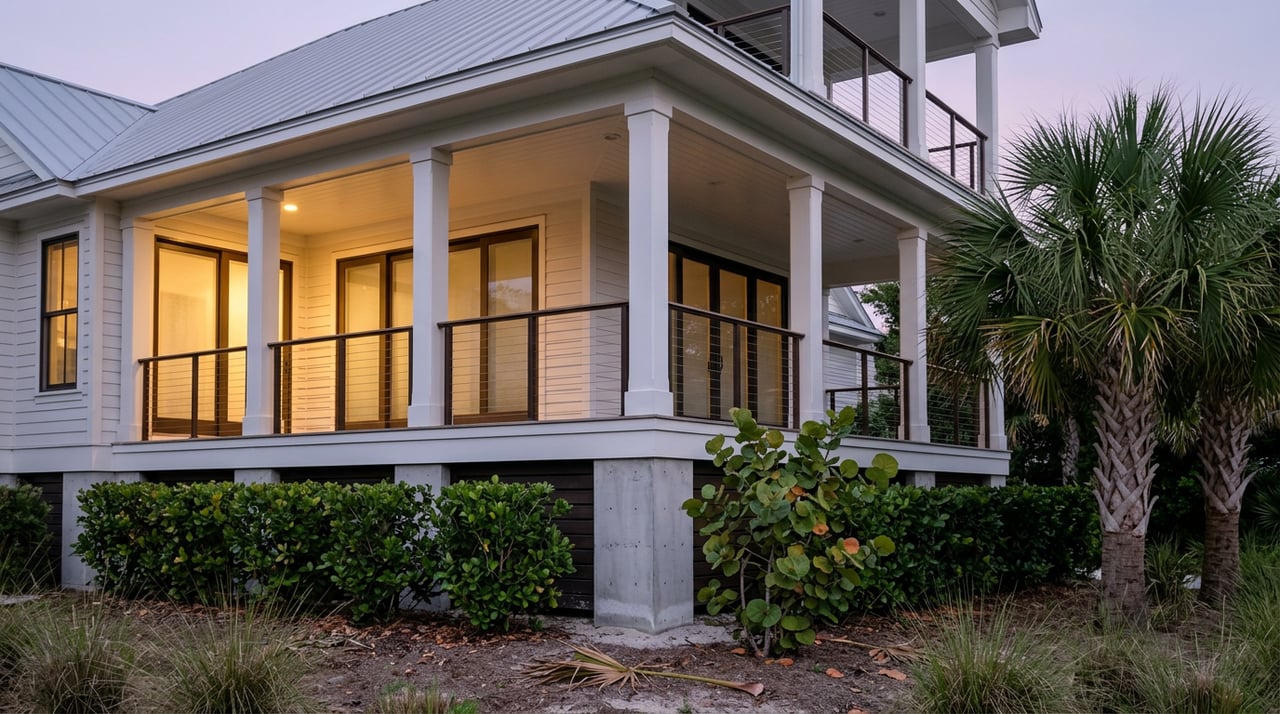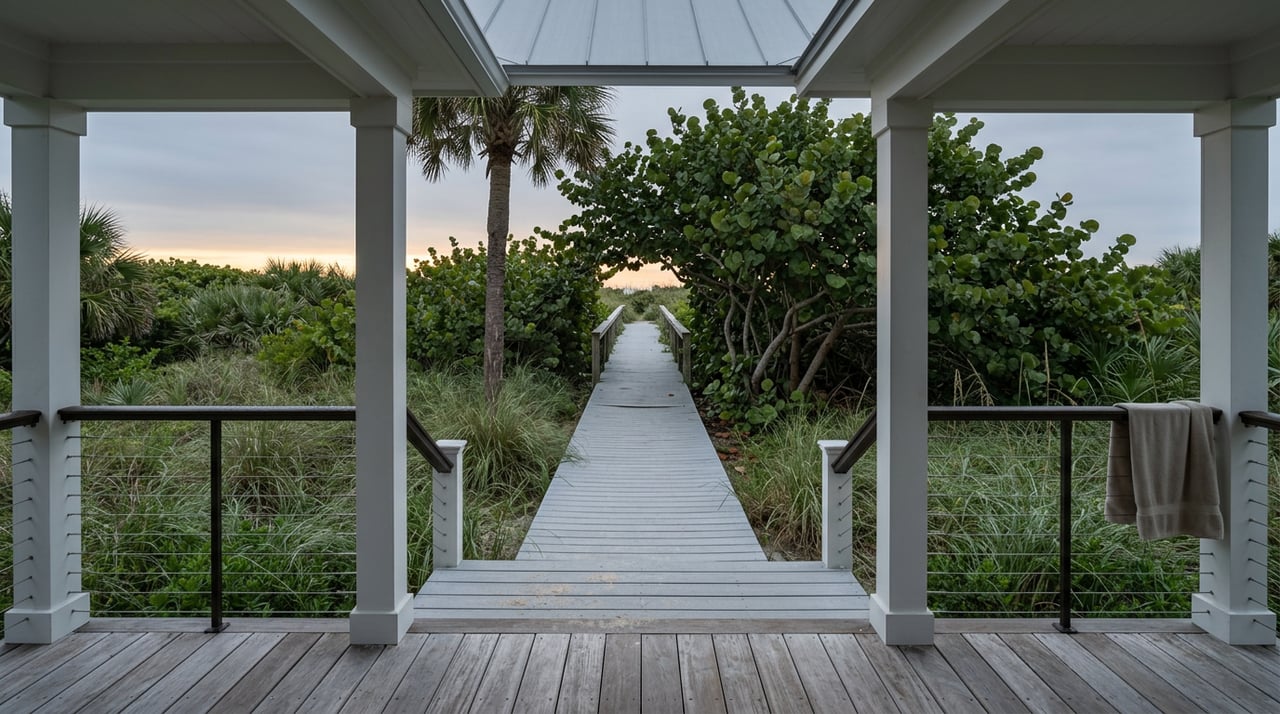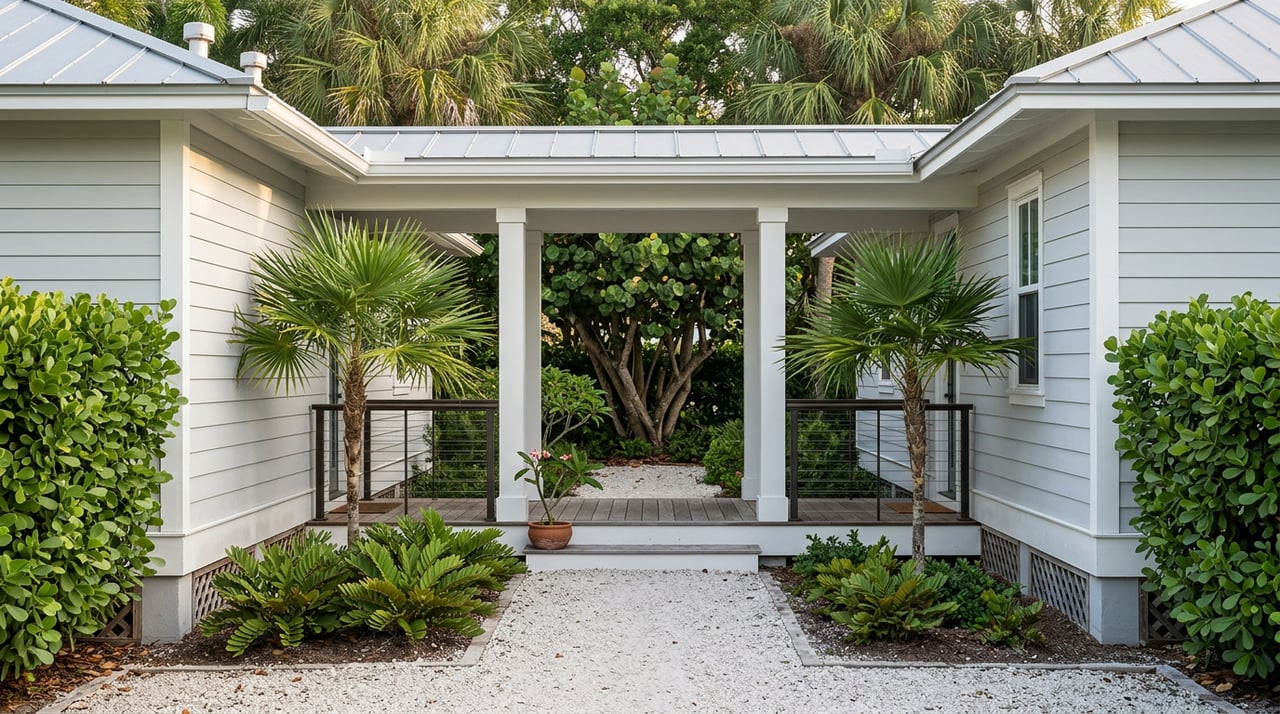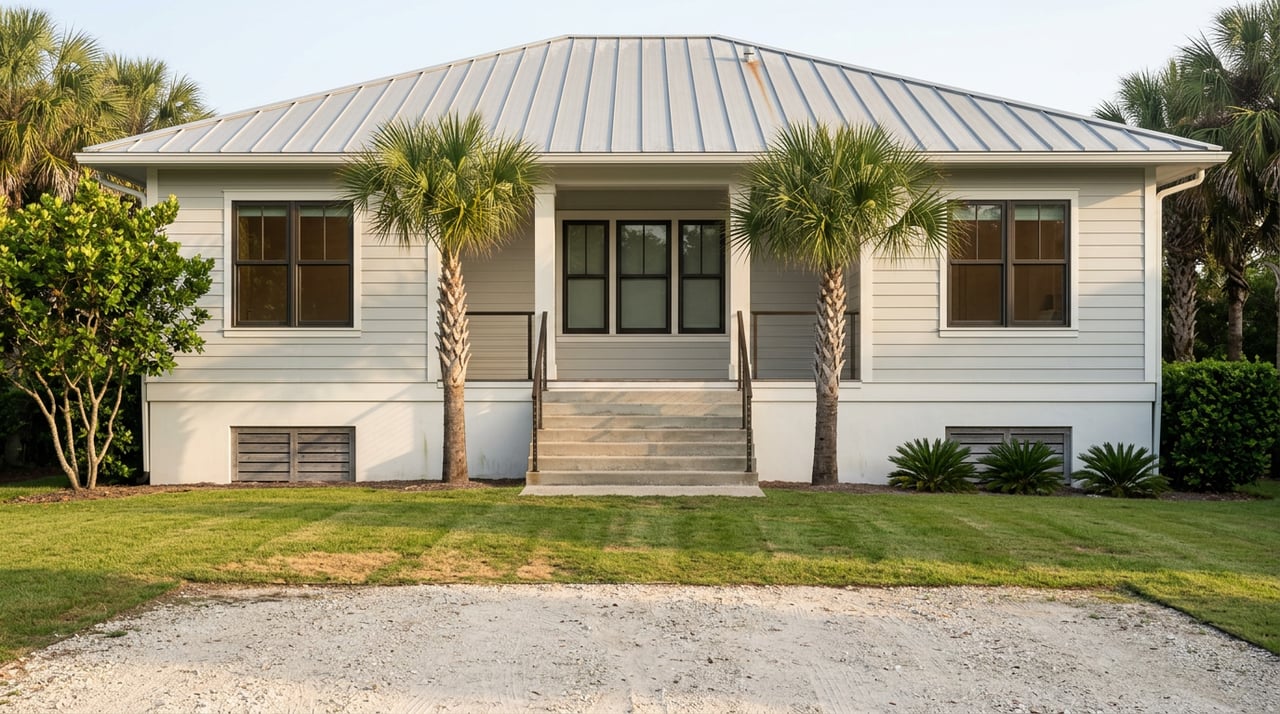
A five-bedroom, five-bathroom estate went up last year in the Gasparilla North subdivision on the North Shore of Gasparilla Island, and the listing copy didn't lead with the pool or the primary suite. It led with dirt. The home is described as sitting on one of the highest elevated lots on the island, tucked at the end of a private cul-de-sac behind masonry privacy walls, its entire 4,000-plus square feet delivered on a single level. That is an odd thing to brag about unless you understand why elevation, not acreage or finish level, is the scarcest resource on this part of the island.
Here is the short version. Gasparilla Island has had a fixed height ceiling since 1980, and that ceiling does not move when flood elevation requirements do. Which means the height a builder is legally allowed to construct above the ground is not the same as the height a builder is left with once code-required elevation is accounted for. A lot's natural grade decides how much of that allowance survives to become an actual house.
A law that has not moved since 1980
The Gasparilla Island Conservation District Act was championed by the Gasparilla Island Conservation and Improvement Association, which worked to see it enacted by the Florida Legislature in 1980, and it is still enforced today by both Lee and Charlotte counties as part of their planning frameworks for Boca Grande. The Act does three things that shape every new build on the island, but one of them matters most for this conversation: no building on Gasparilla Island may exceed 38 feet measured from the grade of the lot to the peak of the roof, or 42 feet above mean sea level, whichever number is lower. The Act also caps density at five dwelling units per acre and forbids new commercial, industrial, or multi-family use unless the parcel was already zoned that way before 1980. Lee County's own planning page for Boca Grande confirms the district still governs development density and character on the island today.
That height number has not changed in over four decades. What has changed, repeatedly, is how high a home's first floor needs to sit above sea level to satisfy current flood elevation requirements.
The ceiling doesn't rise with the flood code
This is the part that catches buyers off guard. The 38-foot allowance is fixed. Flood elevation requirements are not. Every new home on the island has to lift its lowest habitable floor to whatever height current flood mapping and building code demand, and that lift comes directly out of the same 38 feet the Conservation District Act allows for the whole structure, foundation to roof peak.
Picture two lots priced the same, both governed by the identical 42-foot-above-mean-sea-level cap. If one lot sits low and needs several vertical feet of fill, pilings, or stem wall just to get its first floor up to the required flood elevation, that height comes out of the 42-foot budget before a single wall goes up. A lot that already sits higher by nature spends less of its allowance getting to code and banks more of it for the house itself. Same price, same lot size, same zoning. Different amount of house.
This is why the Gasparilla North listing leans on elevation language instead of square footage. A naturally elevated lot let the builder deliver a generous single-story floor plan, one level, no stairs, wide open sightlines, instead of stacking rooms vertically to make up for space lost to flood-code elevation underneath. For a buyer who wants single-level living without giving up scale, that is not a marketing flourish. It is the actual mechanism that made the floor plan possible.
Same idea, different math: what Captiva tried to copy
In 2023, Florida Representative Adam Botana introduced a draft bill to give Captiva Island its own version of Gasparilla's protections, and the Sanibel-Captiva Conservation Foundation described it plainly as modeled after the Gasparilla Island Conservation District Act. But the proposed Captiva Island Conservation Area Act measured its height limit differently. Instead of a fixed number tied to grade or mean sea level, the draft capped new construction at 28 feet above base flood elevation, a number that moves whenever the flood elevation requirement moves, according to WGCU's coverage of the delegation hearing. Density under the draft was set at three units per acre, tighter than Gasparilla's five.
The distinction matters more than it looks. Peg the ceiling to base flood elevation, and the ceiling rises and falls with it, so every lot gets the same usable height regardless of natural grade. Peg the ceiling to grade or sea level, the way Boca Grande's Act does, and natural elevation becomes the variable that decides how much house survives the math. Two islands, two laws built from the same template, two very different answers to the question of which lots come out ahead.
Why the North Shore feels this more than the rest of the island
Most of the island's older inventory, the Village core, Boca Bay, Boca Grande Club, was built years or decades ago under whatever code applied at the time, so this tension mostly sits quietly in the background until a home is torn down and rebuilt. The North Shore is different. It is the part of Gasparilla Island known for expansive lots and long stretches without public beach access, which also means it still has more raw and semi-improved parcels changing hands than the built-out south end. Every one of those parcels gets this math run fresh, lot by lot, the day someone applies for a permit.
That is what makes elevation an active, present-tense variable here rather than a historical footnote. A buyer comparing two North Shore lots at similar price points is not just comparing view or privacy. They are comparing how much of the island's fixed 38-foot allowance each lot's natural grade will let them keep.
What to check before elevation becomes a surprise
- Pull the property's actual elevation certificate from the county rather than relying on marketing language about "high" or "elevated" lots.
- Ask what grade point was used to calculate the 38-foot allowance, since fill history can change what counts as natural grade.
- Have a local architect familiar with the Conservation District Act estimate how many usable feet remain once required flood elevation is subtracted from the cap.
- Confirm whether the parcel falls inside a legacy zoning pocket that predates the 1980 Act's restriction on new commercial or multi-family use, since that history can affect future resale and neighboring development.
- When comparing two similarly priced lots, ask for a rough buildable-height estimate on each instead of comparing lot square footage alone.
None of this shows up on a standard listing sheet, and none of it shows up in a portal's price-per-square-foot comparison. It shows up when a survey crew stakes the site and an architect starts subtracting.
The house you get is decided before you break ground
On most barrier islands, the conversation about a lot starts with lot size and ends with budget. On Boca Grande's North Shore, there is a step in between that the fixed height cap makes non-negotiable: how high the ground already sits. Buyers who understand that are reading a site plan the way sharper buyers elsewhere read a floor plan, and it is exactly the kind of detail that separates a lot that looks good on paper from one that actually builds the house you pictured.
If you are comparing North Shore lots, evaluating new construction, or trying to understand what a specific parcel's elevation actually means for your build, I would welcome the chance to walk through it with you. Melissa Csank works this market daily and can help you read the ground before you fall for the rendering. Schedule a Private Consultation whenever you are ready to talk specifics.