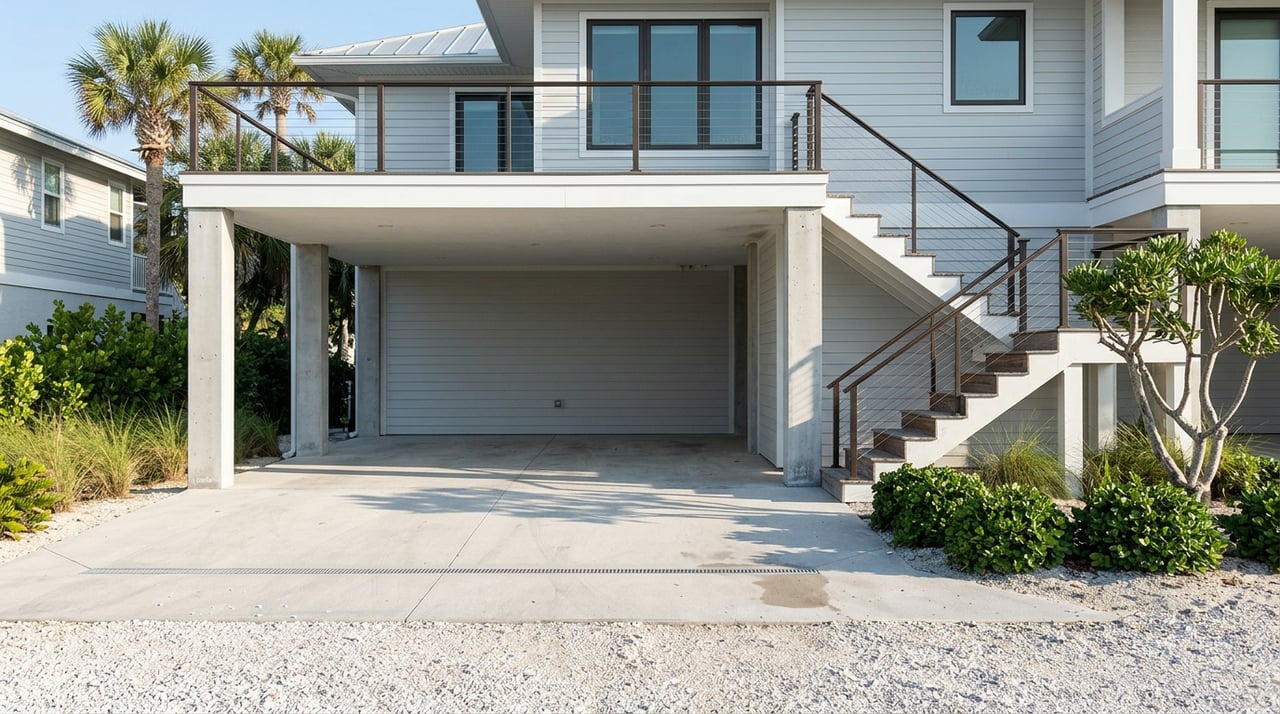
If you love the Boca Grande area but not always the Boca Grande price tag, Placida deserves a closer look. For many second-home buyers, it offers a practical way to enjoy coastal living, boating access, and rental potential while buying at a lower entry point. The key is knowing where the opportunity is, where the risks are, and how to underwrite the numbers with care. Let’s dive in.
Placida offers a lower-cost coastal entry
Placida sits in the same coastal orbit as Boca Grande, but the pricing is notably more accessible. Recent market data shows an average home value around $491,201, with median list prices in the mid-$600,000s and a median sale price of $532,000. By comparison, Boca Grande’s median listing price is about $1.60 million.
For a second-home investor, that gap matters. It can mean a lower upfront investment, more options across property types, and more flexibility to balance your personal use with income goals. It also gives you room to account for carrying costs that are especially important in coastal Florida.
The local market has softened
Placida is not a market to approach with an automatic appreciation mindset. Recent reports show prices down year over year, with average values and median sale prices both softening. Homes are also taking longer to sell, with median days on market around 106 and only a small share selling above list price.
That can create opportunity if you are patient and disciplined. A softer market may give you more negotiating room, but it also means you should buy based on usable value, realistic cash flow, and long-term fit rather than short-term price growth.
Property types vary widely
One of Placida’s strengths is its broad price range. Recent closings have included condos in the $200,000s and $400,000s, single-family homes under $400,000, and waterfront properties well above $1 million.
That range gives you several ways to enter the market. You might prioritize a lower-maintenance condo, a single-family home with more flexibility, or a higher-end waterfront property if lifestyle and long-term hold are your main goals.
Rental potential is real, but seasonal
Placida can work as a second-home investment, but you need to think in seasons, not yearly averages alone. Public rental data shows strong asking rents and relatively limited available inventory. Short-term rental estimates also point to meaningful revenue potential, with average annual Airbnb revenue around $50,928 on a small active listing base.
That said, not every property performs the same way. Data suggests 3-bedroom rentals tend to outperform smaller units on efficiency, with stronger occupancy and higher annual revenue than 1-bedroom listings. If rental income is part of your plan, bedroom count and layout may matter more than you expect.
Winter carries the revenue story
Placida’s short-term rental market has pronounced seasonality. Monthly revenue estimates peak in late winter and early spring, with March around the high point, then fall sharply in late summer and early fall.
County tourism collections tell a similar story. Charlotte County’s tourist-tax revenue is strongest in January, February, and March, while September is much quieter. For you, that means winter demand may do most of the heavy lifting.
Underwrite for the slow months
A common mistake in second-home investing is assuming average revenue will arrive evenly through the year. In Placida, the market data does not support that. You should expect a stronger winter window and a softer off-season.
A more careful underwriting approach includes:
- Conservative occupancy assumptions
- Cash reserves for slower late-summer months
- A pricing plan that reflects seasonal demand
- Realistic estimates for cleaning, maintenance, and turnover
- Full review of HOA or condo fees before you buy
Boating access adds lifestyle value
Placida’s appeal is not only about price. It also has the kind of water-oriented amenities that draw second-home buyers to this part of the coast in the first place.
Charlotte County notes that Placida Park includes a boat ramp and kayaking access. Centennial Fishing Pier is also located in Placida on Gasparilla Road. If you want boating, fishing, and easy access to the water without buying in Boca Grande proper, Placida presents a compelling value proposition.
Short-term rental rules matter
If you plan to rent the property for short stays, you need to understand the local compliance side before you close. In Charlotte County, a local business tax receipt is required if the property is available for rent for less than six months. Owners and operators engaged in short-term or vacation rental activity must also remit tourist development taxes.
The county also advises owners to verify zoning approval before paying the business tax. If the property use or location changes, a change of occupancy may be required. These are not details to sort out later. They should be part of your purchase review.
Know the tax stack
For rentals of six months or less, Charlotte County imposes a 5% tourist development tax. That is in addition to Florida’s 7% state sales tax.
The county says these taxes are due monthly by the 20th, and owners or operators must register and keep records of transient rentals. If you are buying from out of state, this is an area where clear local guidance can save you from expensive surprises.
State licensing may apply
At the state level, Florida DBPR requires a vacation rental or timeshare project license for public lodging establishments that meet the vacation-rental definition. The application process includes items such as a Florida sales-tax number and the addresses of the rental units being licensed.
For seasonal operators, the state also includes a seasonal modifier in the licensing process. If your plan is to use the home personally for part of the year and rent it during peak season, it is worth confirming how your intended use aligns with state requirements.
HOA and condo rules can override your plan
This is one of the biggest issues second-home investors overlook. Even if a property works from a county zoning and tax standpoint, the condo or HOA documents may still limit leasing.
Florida law requires compliance with association governing documents, and those documents can include use and leasing restrictions. Associations may also enforce rules through fines or suspension of use rights for noncompliance. In practical terms, that means you should review declarations, bylaws, covenants, and any leasing rules before you commit.
Flood risk should shape your math
Placida’s biggest ownership risk is environmental. Charlotte County describes the area as low-lying and vulnerable to hurricanes, heavy rain, king tides, and a high water table. The county also notes that flood insurance is separate from homeowners insurance and is mandatory in high-risk zones for federally backed mortgages.
This is not a market where you should estimate insurance casually. Flood exposure, storm resilience, and elevation details can materially affect your carrying costs and your comfort level as an owner.
Use local flood tools early
Charlotte County provides a floodplain portal where owners can look up flood zones, base flood elevations, and elevation certificates. That gives you a practical way to assess a specific property before you move too far into the process.
Climate-risk data for the 33946 ZIP code also points to severe long-term flood exposure. Whether you plan to hold the property for lifestyle use, rental income, or both, flood risk belongs near the top of your due diligence checklist.
Placida works best for disciplined buyers
Placida can be a smart second-home investment if you view it clearly. It is best understood as a lower-cost coastal alternative to Boca Grande, with real appeal for buyers who want boating access, flexible property options, and seasonal rental upside.
It is not a plug-and-play market. The best outcomes usually come from buyers who model insurance, association fees, maintenance, taxes, and off-season vacancy conservatively from the start. If the numbers still work after that, Placida may offer the right mix of lifestyle and value.
If you are comparing Placida with Boca Grande, Cape Haze, or nearby coastal options, the right property is often less about the headline price and more about how you plan to use it. For a second-home buyer, that means matching your purchase to your ownership style, your rental goals, and your tolerance for seasonal and environmental risk.
When you want local guidance that looks at both lifestyle and investment fit, Melissa "Mel" Csank can help you evaluate Placida with the kind of detail remote and seasonal buyers need.
FAQs
What makes Placida appealing for second-home investors?
- Placida offers a more accessible price point than Boca Grande, along with boating and water-access amenities, a range of property types, and meaningful seasonal rental potential.
How do Placida home prices compare with Boca Grande?
- Recent data shows Placida median listing prices in the mid-$600,000s versus about $1.60 million for Boca Grande, making Placida a lower-cost entry into the same broader coastal area.
Is Placida a strong short-term rental market?
- Placida shows solid revenue potential, but demand is highly seasonal, with the strongest performance in winter and early spring and much softer revenue in late summer and early fall.
What taxes apply to short-term rentals in Placida?
- In Charlotte County, rentals of six months or less are subject to a 5% tourist development tax, in addition to Florida’s 7% state sales tax, and owners must register, keep records, and remit taxes monthly.
Do Placida condo and HOA rules affect rental use?
- Yes. Association documents may restrict leasing or use even if county and state rules otherwise allow short-term rental activity, so reviewing those documents before purchase is essential.
Why is flood risk important when buying in Placida?
- Charlotte County identifies the area as vulnerable to flooding, hurricanes, heavy rain, king tides, and a high water table, so insurance costs, flood-zone review, and elevation details should all be part of your investment analysis.