If you are dreaming about waterfront living near Boca Grande, Placida and the Cape Haze Peninsula deserve a close look. This is not a market where every waterfront property works the same way, and that matters when you are choosing a home for boating, seasonal living, or a long-term investment. When you understand how access, storage, bridges, and flood considerations shape daily life, you can buy with more confidence. Let’s dive in.
Why waterfront living here feels different
Placida, Cape Haze, and nearby Englewood sit within a connected coastal system of estuaries, bays, preserves, and barrier islands. The Cape Haze Aquatic Preserve includes waters around the peninsula, including part of Gasparilla Sound, Bull Bay, Turtle Bay, and parts of Charlotte Harbor. On the Englewood side, Lemon Bay Park adds shoreline along the Lemon Bay Aquatic Preserve.
That setting creates a waterfront market shaped by access and use, not just scenery. In many places, buyers compare a water view to a non-water view. Here, you are more often comparing one boating lifestyle to another.
Boating is also central to how people experience the area. Don Pedro Island State Park is accessible only by boat or ferry, which helps explain why so many buyers focus on docks, marinas, launch options, and navigable routes as part of the home search.
The main waterfront options to compare
When you start touring homes in Placida, Cape Haze, and Englewood, most waterfront choices fall into a few clear categories. Each one offers a different mix of convenience, views, maintenance, and boat access.
Canal-front and creek-front homes
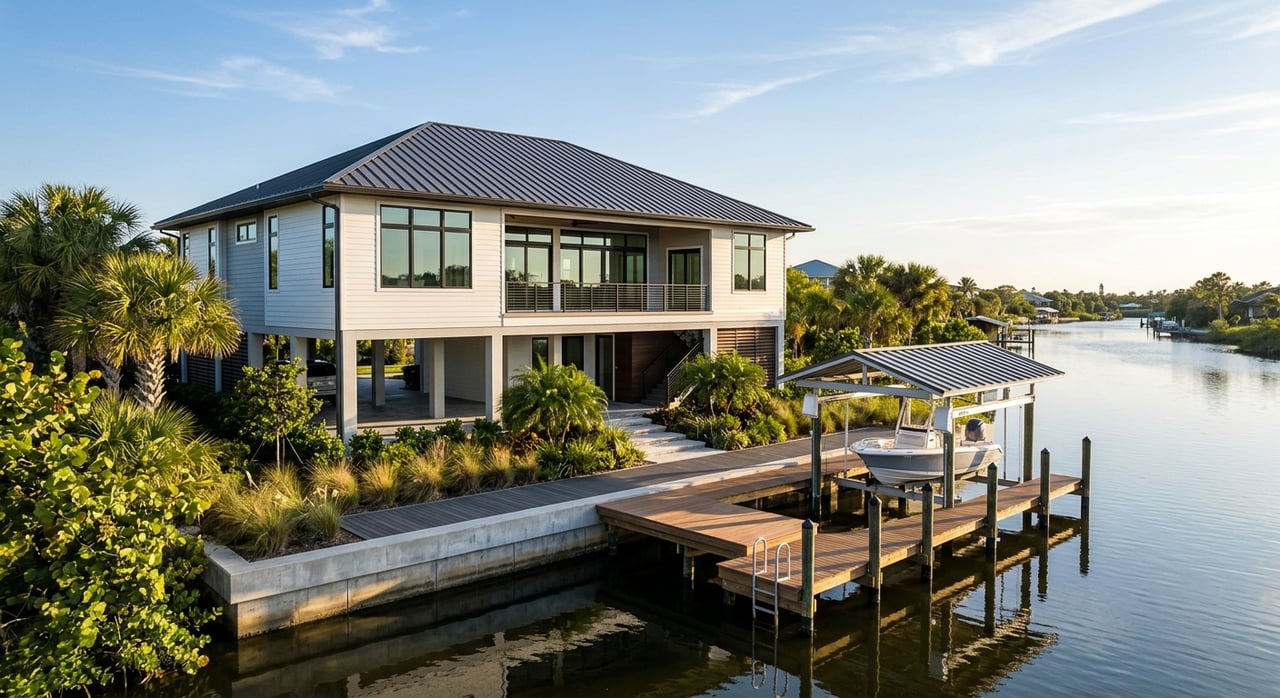
These homes often appeal to buyers who want a private dock close to home. They can be a practical fit for smaller boats and for owners who want to step outside and get on the water without driving to a marina.
The tradeoff is that canal or creek access should always be checked carefully. A home can look perfect on paper but still create limits for your boat based on depth, width, turning room, or bridge clearance along the route.
Bayfront and sound-front homes
Open-water homes usually attract buyers who value wider views and a more direct waterfront setting. If your goal is to wake up to broad water vistas and enjoy a stronger visual connection to the coast, this style may stand out.
Still, a better view does not always mean an easier boating setup. Before you assume an open-water property is the best fit, it helps to compare dock conditions, exposure, route planning, and vessel needs.
Marina-oriented properties
Some buyers want boating access without maintaining a private dock or lift. In that case, a home tied to nearby marina or storage options can be an excellent match.
This area has a notable concentration of boating facilities, including Stump Pass Marina, Palm Island Marina, Gasparilla Marina, Eldred’s Marina, and Whidden’s Marina. That marina network is one reason Placida and Cape Haze often work so well for buyers who want water access near Boca Grande without being limited to island inventory.
Why marina access matters
If you do not need a dock at your house, marina access can open up more property options. You may be able to focus on the home, neighborhood setting, or price point while still keeping your boat nearby.
Current marina information shows a useful range of storage choices in this market. Palm Harbour Marina offers dry stack storage up to 40 feet and wet slips up to 65 feet. Gasparilla Marina reports covered slips for boats up to 40 feet, Harbor at Lemon Bay offers dry storage up to 40 feet, and Stump Pass Marina notes 220 dry slips.
That variety can be helpful, especially if you are a remote or seasonal owner who prefers managed storage over dock upkeep. It can also be a smart solution if your ideal home and your ideal boat setup do not need to be on the same property.
Public launch options add flexibility
Even if you plan to keep a boat in dry storage or at a private dock, public launch access can still matter. It gives you a backup plan and may be useful for guests, kayaks, paddle craft, or trailered boats.
Charlotte County’s Placida Park offers a boat ramp plus kayaking and paddling access. Englewood Beach at Chadwick Park also includes a boat ramp along with canoe and kayak launch facilities.
For many buyers, this extra layer of access supports a more flexible waterfront lifestyle. It can make the area more practical whether you own one boat, several watercraft, or simply want options.
Boat size and route planning matter
One of the biggest mistakes waterfront buyers can make is focusing only on whether a property is on the water. In this part of Florida, the better question is whether your boat can realistically and safely use that waterfront.
Boat fit is about more than overall length. You also need to think about beam, draft, and tower height, along with how and where the boat will be stored.
Bridge clearances to verify
NOAA’s Coast Pilot notes several bridge and route details that buyers should not ignore. The Boca Grande Causeway swing bridge has a 22-foot vertical clearance at the north end, and fixed spans are listed with 26-foot and 16-foot clearances.
The same source describes The Cutoff as a narrow, shallow pass connecting Placida Harbor with Lemon Bay. It also notes that the Coral Creek route includes a small-boat basin and an 8.5-foot fixed-span clearance at the SR 771 bridge.
Those numbers are a reminder that not every waterfront home fits every boat. If your vessel is taller, deeper, or larger, route planning should be part of your home search from the start.
Questions to ask before you buy
Before you move forward on a waterfront property, it helps to confirm a few basics:
- Will your boat clear every bridge on the route?
- Is the route depth appropriate for your draft?
- Does the dock, lift, or slip fit your boat’s length and beam?
- If you need dry storage, does a nearby facility accommodate your vessel?
- Are launch and haul-out options convenient for how you plan to use the boat?
These details may sound technical, but they shape everyday convenience. A beautiful waterfront address works best when it also supports the way you actually plan to live on the water.
Flood and permitting issues to expect
Waterfront ownership in this area also comes with important planning questions beyond boating. Flood zones, insurance, and shoreline-related permitting can all affect your costs and your future plans for the property.
Charlotte County provides flood resources that direct buyers to FEMA flood maps, flood zones, and Coastal A Zone risk. FEMA also notes that homes in high-risk flood zones generally require flood insurance when the mortgage is federally backed.
For beach-adjacent construction, Florida’s Coastal Construction Control Line program may add another layer of review. And for buyers comparing the mainland side to Boca Grande, Lee County’s historic preservation rules require a Special Certificate of Appropriateness before permits for designated historic resources.
The key point is simple: waterfront value is not just about location. It is also about understanding the property’s regulatory and insurance profile before you buy.
Placida and Cape Haze as a Boca Grande gateway
For many buyers, Placida and Cape Haze are not just alternatives to Boca Grande. They are also a practical gateway to it.
The Gasparilla Island Bridge Authority states that the Boca Grande Swing Bridge is the only land link from Charlotte County to the barrier islands of North, Cole, and Gasparilla Island. NOAA also notes that Boca Grande has marinas, boatyards, and a yacht basin, but island inventory is naturally more limited.
That is why many buyers use Placida or Cape Haze as a strategic base. You may gain easier access to mainland marinas, a wider range of home types, and more flexibility in price point, while still staying close to the island lifestyle that draws so many people here.
For some, that choice becomes a long-term fit. For others, it becomes a smart stepping-stone toward Boca Grande later on.
How to choose the right waterfront lifestyle
The best waterfront property for you depends on how you want to use it. A private dock, a marina-based setup, or a view-focused home can all be the right answer depending on your boat, schedule, and goals.
If you are a seasonal or remote buyer, convenience may lead the decision. If you want a hands-on boating routine, a canal-front home with the right route may be ideal. If your priority is scenery and proximity to the coast, an open-water setting may win out.
The most successful buyers in this market usually start with lifestyle questions, then narrow the search based on real-world access. That is especially true in Placida, Cape Haze, and Englewood, where waterfront living is as much about navigation and functionality as it is about the address.
If you are considering a move into this coastal market, a thoughtful local strategy can save time and help you avoid costly surprises. For tailored guidance on waterfront homes, marina-oriented options, and the Boca Grande connection, schedule a private consultation with Melissa "Mel" Csank.
FAQs
What makes waterfront living in Placida and Cape Haze different?
- Placida and Cape Haze are shaped by estuaries, shallow bay systems, preserves, passes, and marinas, so buyers often choose among different water-access lifestyles rather than simply choosing a home with a water view.
What types of waterfront homes are common near Englewood and Placida?
- Buyers often compare canal-front or creek-front homes, open-water bayfront or sound-front homes, and properties that rely on nearby marina or storage facilities instead of a private dock.
What boat access issues should waterfront buyers check in Cape Haze?
- You should verify bridge clearances, route depth, dock or slip fit, storage options, and haul-out logistics because not every waterfront property can accommodate the same boat.
Are there marina options near Placida, Cape Haze, and Englewood?
- Yes. The area includes a strong cluster of facilities such as Stump Pass Marina, Palm Island Marina, Gasparilla Marina, Eldred’s Marina, and Whidden’s Marina.
What public boat launch options are available near Placida and Englewood?
- Placida Park offers a boat ramp and paddling access, and Englewood Beach at Chadwick Park includes a boat ramp along with canoe and kayak launch facilities.
What flood or permitting concerns come with waterfront homes in this area?
- Buyers should review flood zones, potential flood insurance requirements, Coastal A Zone risk, and any shoreline or historic-preservation rules that may affect permits or future property changes.
Why do some buyers choose Placida or Cape Haze instead of Boca Grande?
- Placida and Cape Haze can offer a practical mainland gateway to Boca Grande, with access to marinas, a wider mix of properties, and flexibility for buyers who want to stay close to the island lifestyle.